"Shokuyoku no Aki" to Your Own: How Japanese People Theme the Fall Season
When autumn arrives in Japan, you will start noticing a curious phrase popping up everywhere—in grocery store flyers, TV broadcasts, bookstore displays, and casual conversations.
It always follows a simple pattern: ___ no Aki (___の秋), which translates to "Autumn of ___."
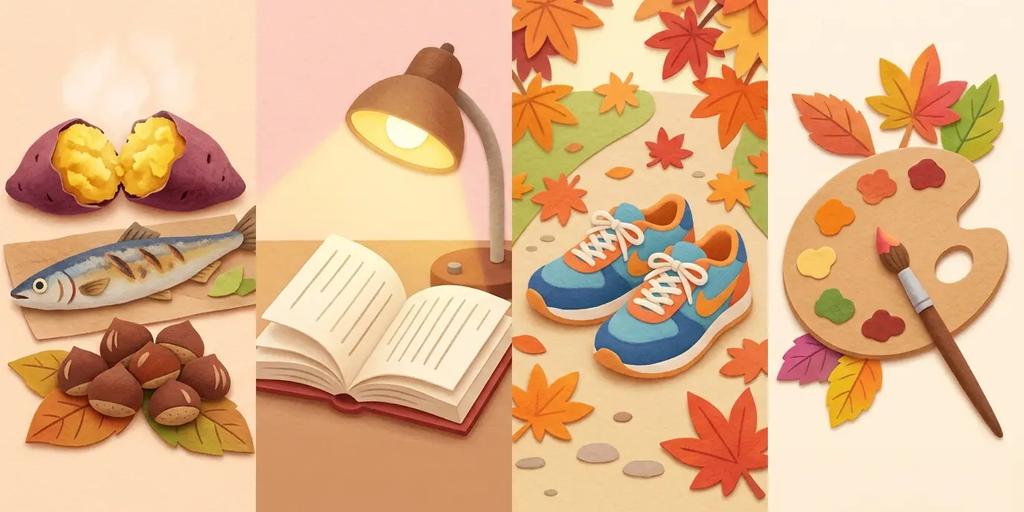
While in English we might simply say "Fall is here" or "It's pumpkin spice season," Japanese culture assigns specific activity themes to the entire autumn season. From food and books to sports and fine art, autumn isn't just a weather change—it's a whole mindset.
Here is a breakdown of the four classic autumn themes, their origins, and how you can use this framework to express your own fall mood!
Table of Contents
The Big Four: Classic "___ no Aki" Themes
1. 食欲の秋 (Shokuyoku no Aki) – The Autumn of Appetite
食欲 (Shokuyoku) means “appetite” or “desire to eat”. If you ask native speakers to pick the most famous theme, 食欲の秋 (Shokuyoku no Aki) is almost certainly number one.
Why Appetite?
There are two main reasons for this. First, autumn is the peak harvest season in Japan. It brings a flood of delicious seasonal delicacies known as 旬 (shun)—a word referring to ingredients at the absolute peak of their freshness and flavor. Think fresh-harvested rice 新米(shinmai), Pacific saury 秋刀魚(sanma), chestnuts 栗(kuri), matsutake mushrooms, roasted sweet potatoes 焼き芋(yaki-imo), and persimmons 柿(kaki).
Second, as temperatures cool down after Japan’s notoriously humid summer, our bodies naturally seek additional energy to prepare for winter.
How to Use It in Conversation:
(I ate baked sweet potatoes again.)
B: まあ、食欲の秋だからしょうがないよ!
(Well, it's the autumn of appetite, so it can't be helped!)
2. 読書の秋 (Dokusho no Aki) – The Autumn of Reading
読書 (Dokusho) means “reading books”. As the nights grow longer and cooler, Japanese people traditionally see autumn as the ideal time to curl up with a good book.
Where Does It Come From?
This phrase, Dokusho no Aki (Autumn of Reading), actually traces back over a thousand years to the Tang Dynasty Chinese poet Han Yu. He wrote a famous poem containing the line “灯火親しむべし”(Touka shitashimubeshi), which essentially means that as the long autumn nights arrive, the weather becomes comfortably cool, making it a wonderful time to draw close to the lamplight and read.
This poetic tradition was later popularized in Japan during the Meiji era by iconic literary figures like Natsume Soseki (夏目漱石) in his novels, eventually becoming a staple cultural phrase.
In Japan, this is often paired with another poetic expression: 秋の夜長 (Aki no yonaga), or "the long nights of autumn."
3. スポーツの秋 (Sports no Aki) – The Autumn of Sports
スポーツ (Sports) means “sports” or “exercise”. In Japan, October is synonymous with school sports days called 運動会 (undoukai) and outdoor physical activities.
The Historical Connection
While staying active in pleasant weather is natural, the national tradition of スポーツの秋 (Sports no Aki) has a very specific historical anchor: the 1964 Tokyo Olympic Games.
The opening ceremony took place on October 10, 1964. To commemorate this event, the Japanese government established October 10 as "Health and Sports Day" (Taiiku no Hi, now celebrated as Sports no Hi). Since then, schools and communities across Japan traditionally host their annual Sports Day events (Undokai) during October and November.
4. 芸術の秋 (Geijutsu no Aki) – The Autumn of Art
芸術 (Geijutsu) means “art / the arts”. As the natural world changes colors, autumn becomes a season of heightened artistic inspiration. 芸術の秋 (Geijutsu no Aki) encourages people to visit art museums, attend concerts, and appreciate creative expressions.
Why Fall for Art?
Starting in the 1920s, major public art exhibitions in Japan—most notably the prestigious Nitten (Japan Fine Arts Exhibition)—began holding their primary annual showcases during autumn. Today, autumn remains the peak season for museums and galleries to launch special temporary exhibitions across the country.
Making It Personal: What Is Your "___ no Aki"?
While the big four themes are fixed parts of Japanese culture, the phrase “___ no Aki” is remarkably flexible. Native speakers frequently invent their own custom themes to suit their personal autumn mood—whether that means embracing 睡眠の秋 (Suimin no Aki – Autumn of Sleep) on a chilly morning, or setting off on 旅行の秋 (Ryokou no Aki – Autumn of Travel).
As for me, while I am overwhelmingly team Shokuyoku no Aki every year thanks to all the delicious fall food, the crisp air always gives me a sudden urge to refresh my home. So for me, this season might actually be 掃除の秋 (Souji no Aki – Autumn of Cleaning)!
What's Your Theme This Year?
The phrase ___ no Aki shows how closely language and daily life are interwoven in Japan. Instead of just observing a change in weather, people actively assign a creative theme to the season to make the most of it.
Now it's your turn! How would you fill in the blank this fall?
Whether it's 勉強の秋 (Benkyou no Aki – Autumn of Studying) or 旅行の秋 (Ryokou no Aki – Autumn of Travel), try using this phrase with your Japanese-speaking friends or study partners!
Categories
Related Articles

秋のフルーツ – Japanese Autumn Fruits

Japanese Autumn Vegetables
Tsukimi Explained: Why Japan Celebrates the Moon (Even When It's Hidden)