Momiji-gari: Why Japan "Hunts" Autumn Leaves
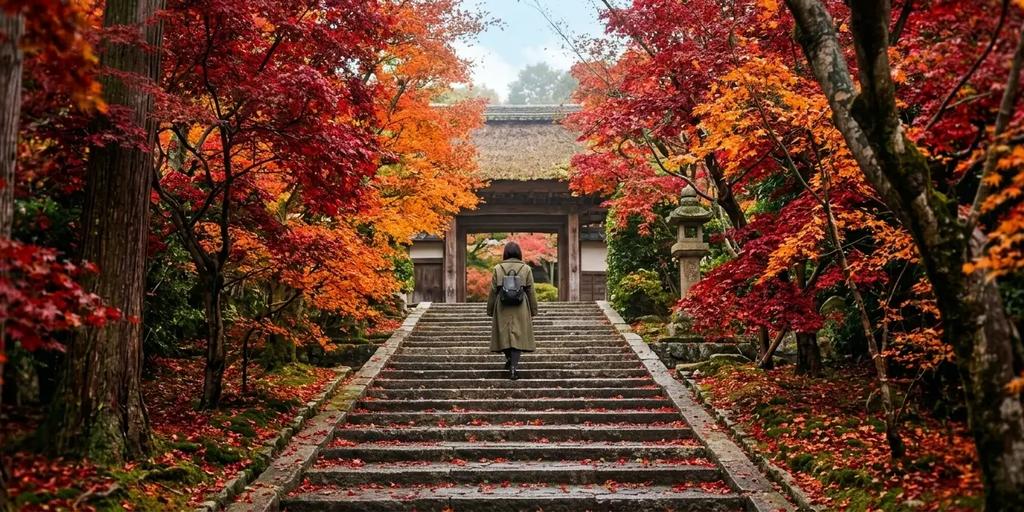
Every October, Japanese weather sites publish a map with a line slowly moving down it. North of the line, the maples have turned red. South of it, they are still green. The line is called the kōyō front (紅葉前線), and plenty of people plan their weekends around it, the same way they plan cherry-blossom picnics in spring.
That spring tradition is hanami. The autumn one is momiji-gari (紅葉狩り). If you have seen the word on a poster or in a travel guide, you may have wondered about the translation: "maple-leaf hunting."
Nobody is actually hunting anything. But the name is not a mistranslation, either—it is a fascinating window into how Japanese people talk about the seasons. It is also a word you will see everywhere from October onward, on train ads, temple signs, and weather apps.
Why Is It Called "Hunting"?
The custom itself is old. In the Heian period (794–1185), autumn was a season for poetry gatherings and trips into the hills around the capital. The Tale of Genji, written around the year 1000, even has a chapter named after it: "Momiji no Ga" (紅葉賀), usually translated as "The Celebration of the Autumn Leaves." In that chapter, an autumn banquet at the Suzaku-in palace gives Genji his big moment, dancing the Seigaiha ("blue ocean waves") beneath the maples.
The surprising part, for most learners, is the word itself. 狩り (kari) does mean hunting, and that is the primary definition you learn first. However, dictionaries list another, gentler sense: going out into the hills to admire flowers or foliage. That is why Japanese has sakura-gari as well as momiji-gari.
What is being hunted is a good view. In autumn, you may even hear it as a casual invitation:
(紅葉狩りに行こう? / "Shall we go see the leaves?")
By the Edo period (1603–1868), that hunt had turned into a day trip for ordinary townspeople. Popular spots of the day included Shōtō-ji in Shitaya, along with Kaian-ji and Tōkai-ji in Shinagawa. People packed special picnic boxes called yusan bentō for the trip. If you have ever queued for a temple garden in November, you were joining a centuries-old party.
Hanami and Momiji-gari: Two Ways to Watch a Season
Cherry blossoms and autumn leaves are often mentioned together, but they ask for different things from the viewer.
- Hanami is a countdown: The buds open, everyone gathers, and the petals are gone within a week or two. Hanami is about catching a fleeting moment.
- Momiji-gari is a process: The maples change over a month or more, shifting from yellow to orange to the deep red Japanese calls beni (紅). Momiji-gari is about following a gradual transformation.
That dynamic process may be why viewing autumn leaves gets such an active verb.

How Autumn Leaves Got Into Art and Literature
If you want to see what momiji-gari looked like before cameras, start with classic artwork:
Kanshū-zu Byōbu (観楓図屏風 / "Screen of Maple Viewing")
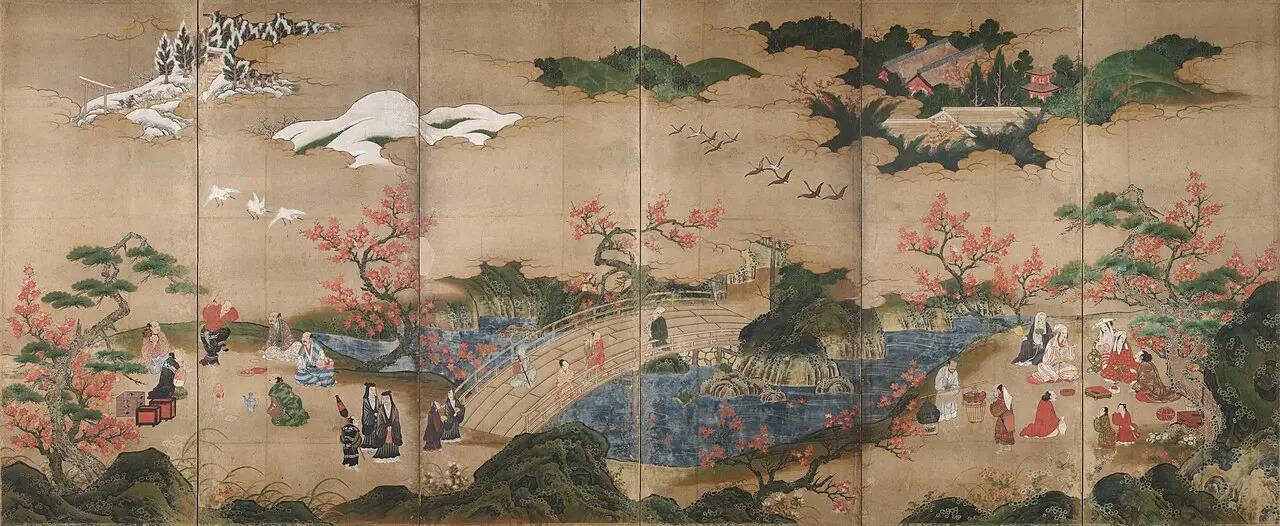
A six-panel National Treasure screen painted by Kanō Hideyori in the sixteenth century. It shows a lively crowd at Takao in the hills northwest of Kyoto, sitting under the maples along the Kiyotaki River. Vendors sell tea and sake while children run around—it looks less like a quiet nature reserve than a vibrant festival.
Tatsuta-hime (竜田姫)
The goddess linked to autumn. In traditional five-phase cosmology, the west corresponded to autumn, and her shrine lay west of the ancient capital in Nara. Legend says she dyed the mountains red, which connects her to autumn foliage and the craft of dyeing. The classical poet Ariwara no Narihira captured this in the Kokinshū: he wrote that the Tatsuta River was "dyeing its waters crimson" because it was covered in fallen leaves.
Momiji-gari (The Noh & Kabuki Play)
This Noh play takes a gentle picnic and transforms it into a supernatural ghost story. Written by Kanze Nobumitsu in the late Muromachi period, it follows the warrior Taira no Koremochi as he stops at Mount Togakushi, accepts sake from a noblewoman, and dozes off. The hosts turn out to be demons, turning an elegant dance into a battle. The kabuki adaptation (1887) is still performed today.
Japanese culture also offers poetic single-word expressions for the landscape, such as kinshū (錦秋, "brocade autumn"), describing mountains that look as though someone spread out a rich bolt of silk.
Momiji in Daily Life
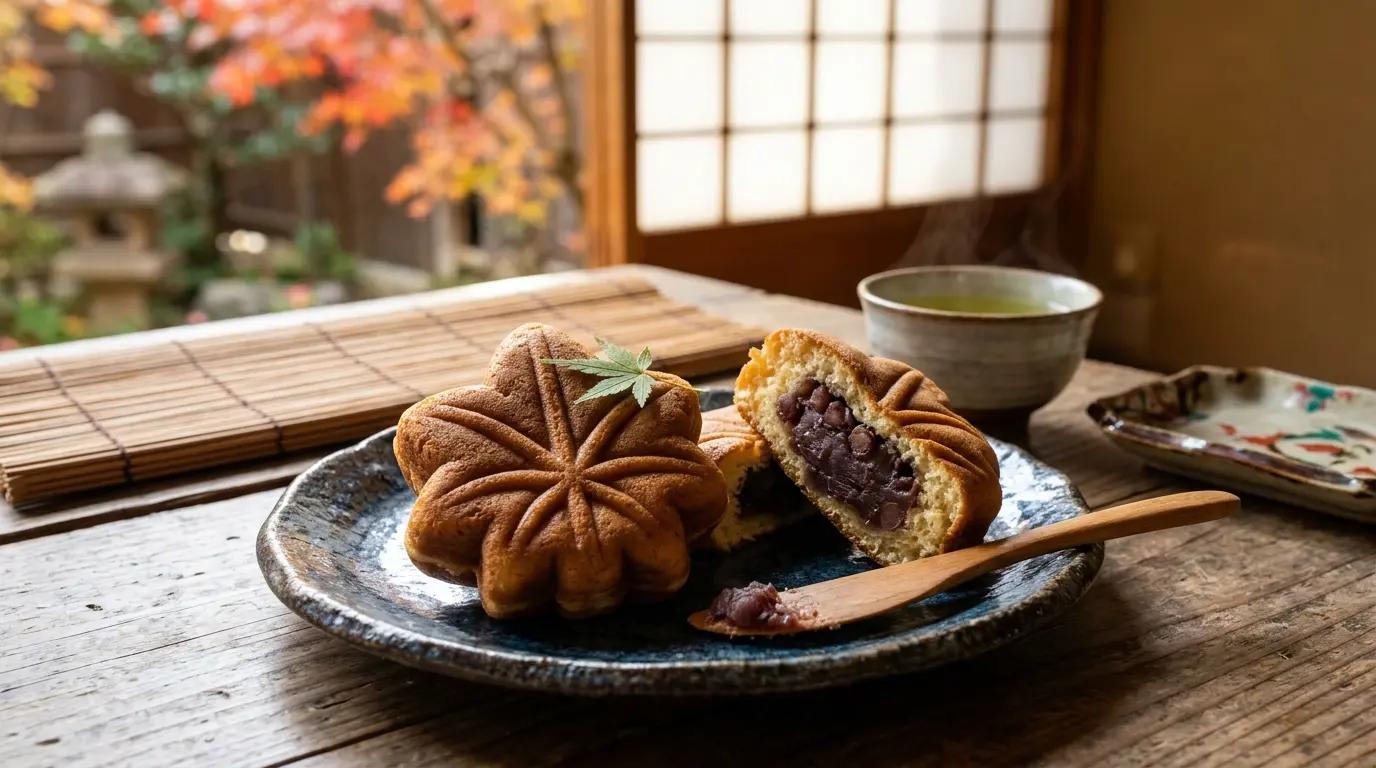
Once you start looking, momiji turns up in everyday idioms, products, and foods that go beyond scenery:
- Baby hands: The phrase momiji no yō na te (紅葉のような手, "hands like maple leaves") is an affectionate expression for a baby's tiny hands—soft, slightly reddish, and small enough to disappear inside an adult's palm.
- Regional treats (Miyajima): On Miyajima island near Hiroshima, confectioner Takatsu Tsunesuke created maple-leaf-shaped cakes in the late Meiji period. Today, momiji manjū (もみじ饅頭) is one of Hiroshima’s signature souvenirs, stuffed with fillings ranging from traditional red bean to chocolate.
- Fried maple leaves (Minoh): In Minoh (north of Osaka), locals fry actual maple leaves. Momiji no tenpura (もみじの天ぷら) traces its history back roughly 1,300 years to En no Gyōja, a mountain ascetic said to have cooked maples in lamp oil after admiring their reflection in a waterfall.
- Weather terminology: Weather trackers regularly monitor migoro (見頃), meaning "best viewing" condition when the majority of a maple tree's leaves have fully turned red.
Where to Join In
Because autumn colors travel from north to south (the opposite direction of cherry blossoms), you can follow the season over several months:
- Late September: Hokkaido
- October: Tohoku & Kanto Mountains
- November: Kyoto & Central Plains
- Early December: Kyushu
If your trip lands in November, Kyoto is an essential destination. Tōfuku-ji’s Tsūten-kyō bridge (built in 1380 over the Senyoku-kan ravine) provides a panoramic vantage point over a crimson sea of maples. Additionally, many major sights—including Kiyomizu-dera—host evening illuminations.
Pro Tip: Famous autumn spots get very crowded. Go early in the morning, aim for a weekday, and check local foliage forecasts before heading out. If the venue feels overly packed, venture out onto a nearby hiking trail—a walk in the hills is how momiji-gari originally began.
What the Season Taught Japanese
All of these traditions share a core mindset: pay attention to things that do not last.
The forecasts, poetry, leaf-shaped cakes, and picnic boxes are all ways of staying present alongside a season in constant motion. Traditional Japanese aesthetics often place greater value on what is shifting or ephemeral than on what is static and complete.
Momiji-gari embodies this perspective. Rather than waiting for a single flawless afternoon to take a photo, you step outside, track the color as it travels down the archipelago, and appreciate that the view will look entirely different next week.
Perhaps that explains the real meaning behind "hunting" autumn foliage: since you cannot keep the season in one place, you go out to meet it where it is.
Categories
Related Articles
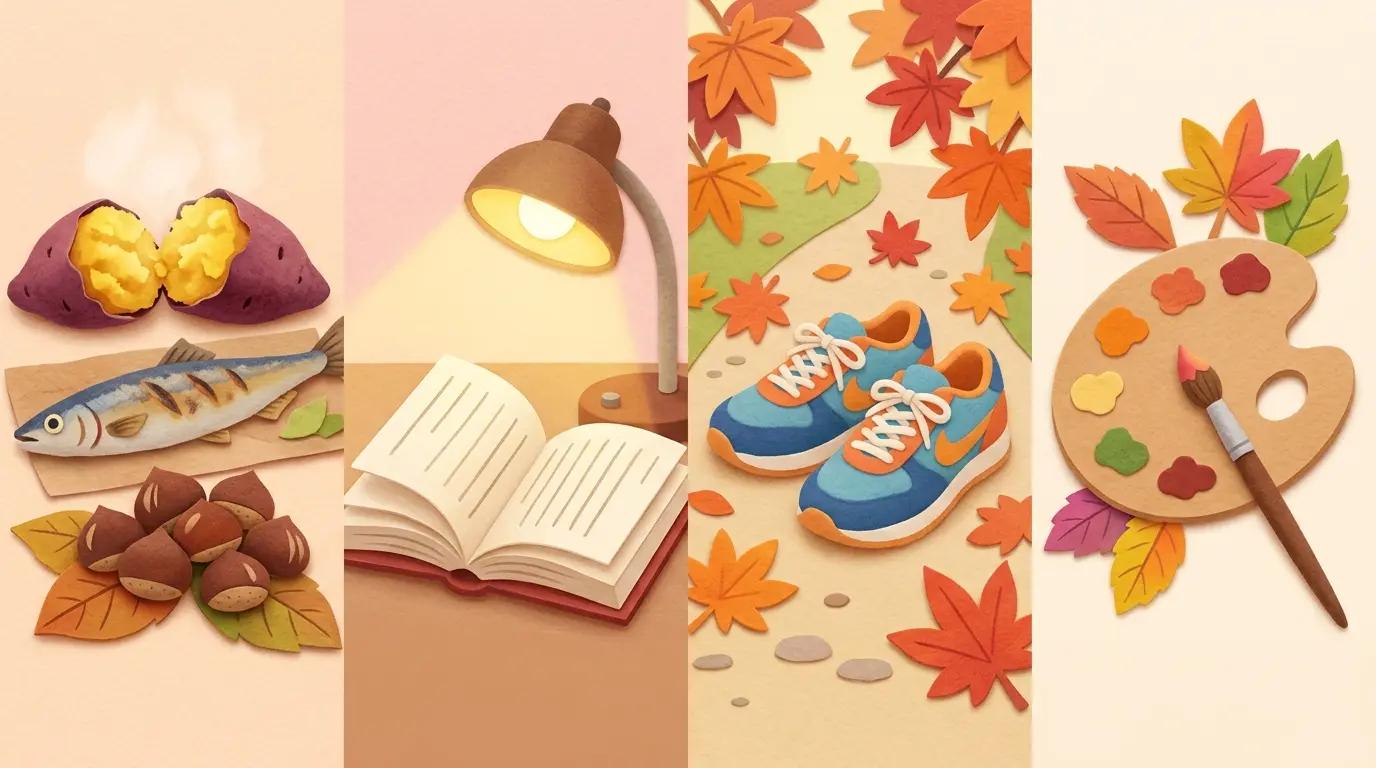
"Shokuyoku no Aki" to Your Own: How Japanese People Theme the Fall Season

秋のフルーツ – Japanese Autumn Fruits

十月 – What is October in Japanese?
