July in Japan 七月 – Japanese Traditions for Surviving the Heat and Humidity

When people think of July in Japan, the first things that come to mind are often the sweltering heat and sticky humidity. And yes—it’s true—summer in Japan is intense! The humidity is something that you have to just experience to understand. On top of that, many homes don’t have central air conditioning and instead each room is individually cooled.
Despite all that, Japan has come up through the centuries with many ways to get through the hot season. July in Japan and summer in general is really when you can experience Japan’s unique culture. July is when you have Tanabata, along with the Gion festival in Kyoto, which are two very important and culturally symbolic elements of Japan. Not only that, but Japan being a country surrounded by water, and mountains everywhere, July officially starts the hiking and swimming season.
Table of Contents
What is July in Japanese?
In Japanese, July is called “Shichigatsu” (七月)—literally, the “seventh month.” But people in Japan didn’t always call it that.
The traditional name is Fuzuki (文月). This translates to the writing month or literature month, or something like that. There are several different theories of how it got that name, but one of the main ones don’t even have anything to do with writing. July is the month in which the ears of rice are harvested. So, from the older form, “Hofumizuki” (穂含月) which roughly means the month of ears of rice we get fuzuki.
There! Now you know something about July in Japanese beyond what a beginner textbook would tell you. Anyway, knowing the word is just the beginning. To truly experience July in Japan, you need to understand its culture—the way people celebrate, endure, and embrace the season in all its intensity.
This guide will help you navigate Japan’s July weather while uncovering the heart of the season:
- Authentic festivals where streets come alive with dance and music
- Unique traditions that define summer in Japan
- Serene escapes from the heat—hidden gems only locals know
Whether you’re a language learner, a culture enthusiast, a traveler planning a summer trip, or an anime fan who’s dreamed of experiencing Japan’s iconic festivals firsthand, this is your gateway to the real July in Japan.
July in Japan: Staying Cool, the Japanese Way
July in Japan is a season of extreme sunshine, sudden downpours, and humidity that we’re not even gonna talk about. But rather than just enduring the heat, the Japanese have mastered the art of enjoying summer through traditions, food, and ingenious ways to stay cool. Whether you’re planning a trip or just curious about Japanese culture, here’s your guide to navigating—and embracing—July’s unique climate.
Understanding the Heat & Humidity – How do people cool down in July in Japan?
Most homes again don’t have central air conditioning, but instead have individual cooling units in each room. So, if you are staying somewhere you will likely have your remote to turn it on and off as needed. That does not help though when you go outside though. If you are traveling through Japan you will likely be spending a chunk of your time outside from point A to point B, so you will want to be ready.
By mid-July, Japan’s rainy season, 梅雨 (tsuyu) (plum rain) typically tapers off, leaving behind steamy, sunny days. In Tokyo, the average high temperatures have ranged from around 25°C – 31°C (77°F – 88°F) between 1875 to 2024 per the Japan Meteorological Agency. Add to that humidity from 78 to 87% and Japan being surrounded by ocean, you have a sticky situation. But it can still downpour. So have your umbrella, breathable clothing, sunscreen, hat, water, and portable fan. It is similar across Japan, but places like Hokkaido are much more mild with temperatures 18°C – 26°C (64°F – 79°F).
That is not the only way to stay cool though. Japan has more traditional methods also.
🎐 Furin (風鈴) – Wind Chimes of Summer
The gentle cling-clang of glass wind chimes is the soundtrack of Japanese summer. More than decoration, their sound is believed to bring a psychological coolness.
🌬️ Uchiwa (うちわ) & Sensu (扇子) – Traditional Fans
- Uchiwa: Flat, rigid fans—often given as festival freebies.
- Sensu: Folding fans, elegant and portable—a must for summer outings.
👘 Yukata (浴衣) – Summer’s Casual Kimono
Lightweight and breathable, yukata are worn at festivals and fireworks displays. Bonus: They’re surprisingly comfortable in the heat!
🍜 Nagashi Somen (流しそうめん) – Flowing Noodles Fun
Slurping cold somen noodles as they glide down a bamboo flume is the ultimate summer dining experience—refreshing and playful!
🍧 Kakigori (かき氷) – Shaved Ice Heaven
From classic matcha and strawberry syrup to extravagant toppings like condensed milk and mochi, kakigori is Japan’s favorite summer dessert.
♨️ Summer Onsen (温泉) – Hot Springs in the Heat?
Yes! Open-air baths 露天風呂(rotenburo) under the stars or cooler sulfur springs 炭酸泉(tansan-sen) are surprisingly pleasant in July.
July Festivals in Japan: Fireworks, Romance & Ancient Traditions
July in Japan isn’t just about the heat—it’s a month where history, legend, and community come alive through dazzling festivals. From Kyoto’s grand processions to star-crossed love stories written in the sky, these celebrations define Japanese summer. Here’s your guide to the most iconic July events and how to experience them!
Gion Matsuri (祇園祭): Kyoto’s Ancient Spectacle
The Gion Matsuri (祇園祭) began in 869 AD as a purification ritual to calm a plague, but today it’s one of Japan’s most iconic festivals. It is one of the three 日本三大祭 (nihon sandai matsuri) or three great festivals of Japan. The Gion festival is the whole month of July from the first to thirty first in Kyoto. The main event though, the 山鉾巡行 (Yamaboko Junko) is on July 17, and features massive hand-pulled floats parading through the city. The night before, during 宵山 (Yoiyama), Kyoto’s streets fill with food stalls while locals open their homes to show off heirlooms in an elegant custom known as 屏風祭 (Byobu Matsuri).
Tenjin Matsuri (天神祭): Ōsaka’s Grand Boat Festival
天神祭(Tenjin Matsuri) is a festival held at 天満宮(Tenmangu) or 天神社(Tenjin shrines) throughout Japan. Tenjin Matsuri at Osaka Tenmangu Shrine is one of the three major festivals in Japan along with Gion Matsuri in Kyoto and Kanda Matsuri in Tokyo. The festival is held over a period of about one month, from late June to July 25. Especially on the night of the main festival on the 25th, many boats come and go along the 大川 (Okawa River)with a fireworks display.
The Tenjin Matsuri, with a history spanning over 1,000 years, originated from a purification ritual in 951. The festival, symbolizing Naniwa’s prosperity, evolved into a grand boat procession, renowned for its splendor and supported by a dedicated organization.
Tanabata (七夕): The Star Festival’s Deeper Meanings
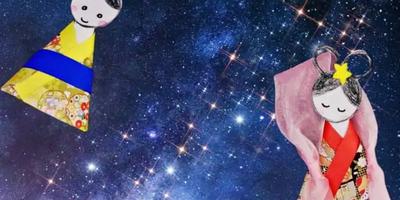
Tanabata celebrates the once-a-year reunion of Orihime (Vega) and Hikoboshi (Altair), lovers separated by the Milky Way. On July 7th (or August 7th in places like Sendai), people hang colorful decorations on bamboo to send their wishes skyward. Each ornament holds a unique hope—tanzaku for learning, orizuru for longevity, and kinchaku for prosperity. If you want to know more though, I have a whole article about it below.
Why Hokkaido is Perfect in July: Cooler Climates & Lavender Fields
If you’re looking for cool places in Japan in July, look no further than Hokkaido. While much of Japan swelters under hot, humid skies, Hokkaido offers a refreshing escape with temperatures between 18°C and 26°C (64–79°F) and low humidity. You won’t find the sticky heat of Tokyo or Kyoto here—just crisp mountain air and endless open skies.
One of the biggest reasons to visit Hokkaido in July is the lavender season, especially in Furano and Biei. This is peak bloom for the island’s most iconic summer scenery, when the countryside transforms into oceans of purple.
富良野市(Furano City) – Hokkaido Lavender Season
The best time to see lavender depends on the variety, But blooming starts in late June. The Okamurazaki variety, which has the largest acreage in Furano, is at its peak in mid-July. Exactly why Hokkaido in July is the time to come! But, Late bloomers can be enjoyed until early August if you stay a bit later in Japan.
美瑛(Biei City) – Hokkaido’s Colorful Hills
The next place you can see Lavender’s in Hokkaido is Biei City’s 色彩の丘(Shikisai-no-Oka) or Hill’s of Color. Not only that, but after the Lavenders time has ended you can see a display of marigolds and red salvia blooming brightly in July.
July in Japan, Putting it all Together
From the sacred elegance of Gion Matsuri to the celestial longing of Tanabata, and the communal sparkle of local hanabi, July in Japan isn’t just something you survive—it’s something you feel. These festivals aren’t about spectacle alone; they’re about memory, community, and an ancient dialogue between people, nature, and the divine.
Whether you’re chasing fireworks in a quiet fishing town, whispering wishes into tanzaku, or cooling off in Hokkaido’s lavender fields, Japan in July is an invitation to experience the country at its most alive—fleeting, fragrant, and full of soul.
Resources