Japanese Emoji (絵文字)👺 – The Hidden Culture in your Keyboard
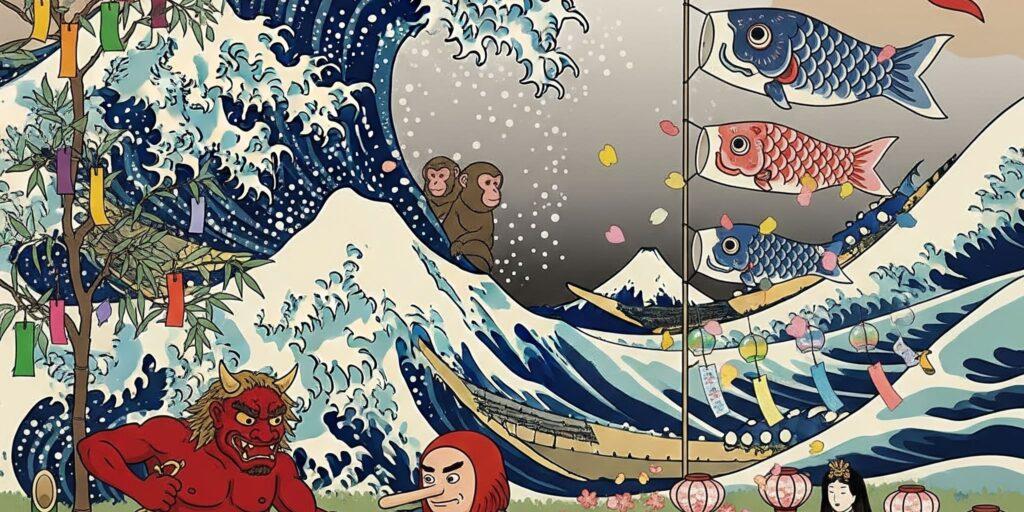
Japanese Emoji have become an international Language. In high-context Japanese culture, people rarely express emotions and intentions explicitly. However, Emojis help compensate by adding clarity and non-verbal elements to digital conversations. So it’s no surprise that this is where emojis were born.
First, what does emoji mean? While it sounds like the English word “emoticon,” the two are not related. Instead, Emoji comes from 絵文字 (emoji, literally picture letters). Japan created these images to fill in the non-verbal cues missing from text.
In 1999, Shigetaka Kurita created a set of 176 emoji for NTT Docomo’s i-mode platform, drawing inspiration from Japanese manga, weather pictograms, kanji, and Japanese culture.

Later, The Unicode Consortium, supported by major tech companies, standardized emoji in 2010, ensuring consistent display across devices.
Although emoji have become global, many remain uniquely Japanese. Here, we demystify what they mean.
Table of Contents
👹 Ogre (Oni): Unmasking the Japanese Demon Emoji
The 👹 Ogre emoji specifically represents the 鬼 (oni) — ogre/demon — a central and highly popular figure in Japanese folklore and mythology. Moreover, Writers and artists typically depict oni with red or blue skin. People sometimes translate the term as devil, demon, troll, or ogre. However, oni works best because it refers to a distinct type of monster unique to Japan.
They are also one of the most common types of 妖怪 (yōkai) — supernatural creatures.
👿 Additionally It is also important to mention how the oni differs from the 悪魔 (akuma) — devil — emojis. The akuma emoji represents a devil, imp, or mischievous figure. In Japanese, 悪魔 (akuma) is the general term for a demon or devil. While oni resemble ogres or devils and rank among the most popular types of 妖怪 (yōkai), oni belong specifically to Japanese folklore. On the other hand, devils represent a more Western concept of monsters with religious or moral significance. People in Japan do not treat the two as the same.
Japanese media and culture often depict devils as small, cute figures. They sometimes have black or purple skin or appear as children wearing devil costumes.Typically, These characters usually act as mischievous tricksters rather than embodying pure evil. 😈

The main word for devil in Japanese is 悪魔あくま(akuma). But, the word devil in English does not mean ...Japanese Universe
The Japanese associate these demon figures directly with the 節分 (Setsubun) festival. Setsubun marks the separation of seasons in Japan, signaling the end of winter and the beginning of spring. People often translate it as season separation or seasonal dividing.
The main custom of Setsubun is 豆撒き (mamemaki) — bean scattering. During mamemaki, people throw dry soybeans at oni, or at individuals dressed as oni or wearing oni masks. People chant the phrase 鬼は外、福は内 (oni wa soto, fuku wa uchi) — out with the demons, in with the fortune — as they throw beans during this practice. This chant embodies the idea of expelling bad things and inviting good fortune into one’s life.
Beyond Setsubun, oni frequently appear in various aspects of Japanese culture. For example, traditional art depicts them vividly. You see their imagery in 能 (Noh) and 歌舞伎 (Kabuki) theater. Modern anime and manga also frequently feature them. For example, in Kimetsu no Yaiba (Demon Slayer), the characters refer to the zombie-like monsters as oni.
The oni emoji carries rich cultural weight. Not only does It represents more than a scary monster — it signifies a specific entity rooted deeply in Japanese tradition. Furthermore, it also plays a significant role in annual rituals like the Setsubun festival.
👺 Goblin (Tengu): The Winged Mountain Dwellers of Japan
The 👺 Goblin emoji represents the 天狗 (tengu) — heavenly dog — a distinct and powerful type of 妖怪 (yōkai) — supernatural creature — with magical powers. People strongly associate them with mountains and root their origins in 山岳信仰 (sangaku shinkō) — mountain worship.
Artists and storytellers typically depict tengu with long noses, wings, and clothing resembling that of ascetic Buddhist hermits called 山伏 (yamabushi) — mountain ascetics. They wear 一本歯高下駄 (ipponba takageta) — single-toothed tall clogs — and carry a 羽団扇 (hane uchiwa) — feather fan.
But there is a significant variant of the tengu that looks much different. Specifically, Artists and storytellers depict the 烏天狗 (karasu tengu) — crow tengu — with a bird’s beak instead of a long nose. Some theories suggest the long nose of the common tengu is a remnant of a bird’s beak.
People assign tengu complex roles. Sometimes they act as protective spirits. Other times, they play mischievous tricksters. In some cases, communities worship them as gods — especially powerful 大天狗 (daitengu) — great tengu — like Tarōbō of Mt. Atago or Sōjōbō of Mt. Kurama.
Artists also depict tengu as symbols of arrogance, often visualizing this trait through their famously long noses.
This emoji specifically represents the tengu mask. Japanese people commonly buy it as a souvenir and frequently display it at festivals throughout Japan.
🙈🙉🙊 The Three Wise Monkeys: Wisdom from Nikko’s Shrine
The trio of 🙈 Mizaru (見ざる) — see not, 🙉 Kikazaru (聞かざる) — hear not, and 🙊 Iwazaru (言わざる) — speak not, are collectively known as the 三猿 (San’en / Sanzaru) — Three Wise Monkeys. They are instantly recognizable through their standard emoji meanings: “see no evil, hear no evil, speak no evil”.
People famously trace their origin to the 東照宮 (Tōshō-gū) Shrine in 日光 (Nikkō), Japan. Craftsmen immortalized them in a well-known wood carving on the 神厩舎 (Shinkyūsha) — sacred stable — which houses divine horses. This stable features eight carvings of monkeys along its lintels, satirizing human life, with the “Mizaru, Kikazaru, Iwazaru” sculpture being the most iconic.
The proverb 見ざる聞かざる言わざる (mizaru, kikazaru, iwazaru) literally means “do not see, do not hear, do not speak”. Philosophically, Its meaning suggests that it’s best to avoid engaging with evil: not witnessing, listening to, or spreading it. For instance, by not dwelling on the faults or mistakes of others. It encourages discretion and mindfulness.
In Japanese, the negative verb ending ざる (zaru) conveniently puns with 猿 (saru) — monkey, reinforcing the association. This play on words helped create the symbolic link between these negations and monkeys.
Beyond the emoji or shrine connection, these monkeys represent a deep cultural symbol of wisdom. Traditionally, people have long revered monkeys as guardians of horses and believed they could ward off evil. They also associate monkeys with 申 (saru) — the zodiac monkey — and link them to the folk tradition of 庚申待ち (Kōshin-machi), which involves night-long vigils to prevent spirits from reporting one’s sins to the heavens.
Interestingly, archaeologists have discovered similar three-monkey figures at ancient sites across the globe — from ancient Egypt to Angkor Wat — suggesting the motif traveled to Japan along the Silk Road.
💮 White Flower (Hanamaru): A Mark of Excellence
The 💮 White Flower emoji, or 花丸 (hanamaru) — flower circle — displays a spiral of multiple circles with flower-petal-like patterns drawn around the outside. In the Japanese education system, teachers give students the hanamaru stamp in early childhood and elementary school to reward excellent work or perfect answers. Thus, this emoji stems directly from that tradition.
This practice makes the hanamaru emoji a direct symbol of achievement and praise.
In Japan, this emoji and the mark it represents symbolize “well done“, “excellent“, or “perfect score“. Essentially, it’s a uniquely Japanese way to acknowledge success in academic or childhood settings — much like a gold star in the United States. When you see the Japanese student stamp emoji, it acts as a visual shorthand for outstanding performance, carrying a warm, encouraging sentiment.
🎋 Decorative Japanese Bamboo (Tanabata Tree): Wishes and Stars Emoji
People associate the 🎋 Decorative Bamboo emoji closely with the 七夕 (Tanabata) — Star Festival.
The Tanabata Festival celebrates the tale of 織姫 (Orihime) and 彦星 (Hikoboshi) — lovers separated by the Milky Way. Originally, the festival originated from the Chinese Qixi Festival. After arriving in Japan, it blended with Japanese weaving traditions and gradually evolved into the event celebrated today.
Festival participants write wishes on colorful paper strips called 短冊 (tanzaku) — wish strips — and hang them on bamboo branches, symbolizing hope and resilience. Each tanzaku traditionally corresponds to one of the five elements and five virtues. For example, the emoji shows a red tanzaku, representing fire and propriety.
If you want to learn more about the festival, I have a full article about it below.
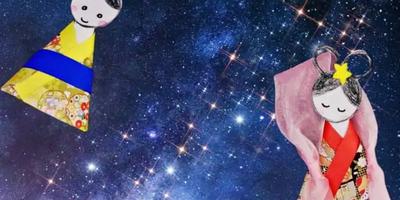
Tanabata in Japan happens every year on July 7th. It is a time to celebrate the tale of two galacti...Japanese Universe
🎍 Pine Decoration (Kadomatsu): Emoji Welcoming Japanese Deities for the New Year
People use the 🎍 門松 (kadomatsu) to welcome ancestral spirits or 神 (kami) — deities — of the harvest, especially 年神様 (Toshigami-sama) — New Year God. It serves as a 依代 (yorishiro) — temporary dwelling place — for these visiting deities. Typically, people typically place these decorations outside homes and businesses, especially at gates or entrances.
Craftsmen generally make kadomatsu from a combination of 松 (matsu) — pine, 竹 (take) — bamboo, and 梅 (ume) — plum. Each carries a symbolic meaning:
- Pine (松), as an evergreen tree, symbolizes vitality.
- Bamboo (竹) represents longevity.
- Plum (梅) stands for resilience and renewal.
While pine usually features, some regions or shrines use 榊 (sakaki) or cedar instead.
People follow specific customs for placing and removing kadomatsu. Traditionally, they display them after December 13th, often putting them up after Christmas and before the 28th. They avoid setting them up on December 29th, December 31st (大晦日 – Ōmisoka), or New Year’s Day itself, considering those dates unlucky. They remove the decorations after the 松の内 (Matsunouchi) period, which runs from January 1st to January 15th.
Thus, the kadomatsu emoji is a key Japanese New Year symbol. Japan treats it as more than just a pine decoration — it acts as a sacred and symbolic fixture inviting good fortune and divine blessings into homes for the coming year.
🎎 Japanese Dolls (Hina Dolls): Emoji Celebrating Girls’ Health and Happiness
The 🎎 Japanese Dolls emoji represents 雛人形 (hina-ningyō) — Hina Dolls. These play a central role in 雛祭り (Hinamatsuri) — Doll’s Festival — also called the 桃の節句 (Momo no Sekku) — Peach Festival. People celebrate this festival every year on March 3rd to honor girls’ health and happiness.
Historians trace Hinamatsuri’s origins to the 上巳の節句 (Jōshi no Sekku) — Purification Festival of the First Day of the Serpent — during the mid-Heian period. By the late Heian period, young girls played ひいな遊び (hiina-asobi) — doll play. The shogunate elevated the festival during the early Edo period. Later, commoners later embraced it, adding the tradition of celebrating a girl’s first festival, known as 初節句 (hatsuzekku) — first seasonal festival. Though the festival declined during the Meiji period, communities revived it as a lively folk event focused on women.
During Hinamatsuri, families display hina dolls arranged in tiers that mimic a court wedding ceremony. The display usually features seven tiers, each presenting specific dolls and furnishings symbolizing different roles and ceremonial aspects.
The two dolls shown in the 🎎 emoji come from the top tier and depict the Emperor and Empress dolls. People call these 内裏雛 (dairi-bina) — imperial couple dolls — and they dress them in twelve-layered kimonos.
🎏 Carp Streamer (Koinobori): Soaring Wishes for Children’s Growth
🎏 Carp Streamer (Koinobori): Soaring Wishes for Children’s Growth
The 🎏 Carp Streamer emoji represents 鯉のぼり (koinobori) — carp streamers — which are the iconic flying carp banners flown for こどもの日 (Kodomo no Hi) — Children’s Day, part of Japan’s Golden Week in May.
The carp symbolizes strength, perseverance, and determination. That’s why families traditionally fly koinobori to express wishes for their sons’ health and success. However, families with daughters also display them today as part of broader celebrations.
The tradition of koinobori originated in the Edo period among samurai families. It began as a custom for 端午の節句 (Tango no Sekku) — the Boys’ Festival, now known as Children’s Day — to pray for the healthy growth of boys.
People originally flew only black carp, known as 真鯉 (magoi). After the Meiji era, they added red carp — 緋鯉 (higoi). During the Showa period, they introduced blue carp — 青鯉 (aogoi) — symbolizing the nuclear family structure. More recently, families have adopted colorful smaller carp streamers to represent all their children, including girls.
Although the custom started in the 関東 (Kantō) region, communities now hold koinobori events across Japan.
🎐 Wind Chime (Fūrin): Emoji Echoing Japanese Summer
The 🎐 Wind Chime emoji conveys wind chime in its standard meaning. Specifically, these are 風鈴 (fūrin) — wind chimes — a quintessential symbol of Japanese summer.
People hang these small bell-shaped ornaments, called 風鈴 (fūrin), under the eaves of houses during summer in Japan. They don’t just produce sound. Historically, people say they bring a sense of coolness and historically used them to ward off evil spirits.
Japanese describe the 風鈴 (fūrin)’s sound as 涼しげな音 (suzushigena oto) — cool and refreshing sound. They often compare it to the calls of bell crickets (鈴虫, suzumushi) that signal the coming of autumn. Therefore, listening to 風鈴 (fūrin) provides relief from Japan’s hot, humid summers, making this emoji a key representation of a classic Japanese summer sound.
🎑 Moon Viewing (Tsukimi): A Celebration of the Autumn Moon
The Japanese word for moon is 月 (tsuki). The 🎑 月見 (Tsukimi) — moon viewing — emoji represents the late summer to early fall festival. People celebrate it on the 15th night of the 8th month (十五夜, Jūgoya) and the 13th night of the 9th month (十三夜, Jūsanya) according to the old lunar calendar. Additionally, People also call 十五夜 (Jūgoya), celebrated on August 15th in the old calendar, お月見 (O-tsukimi) — honorable moon viewing.
The image shows 団子 (dango) — rice dumplings — which people traditionally offer and eat during the festival. This Japanese moon emoji connects deeply to several cultural elements. For Instance, people often associate it with the old saying that rabbits live on the moon.
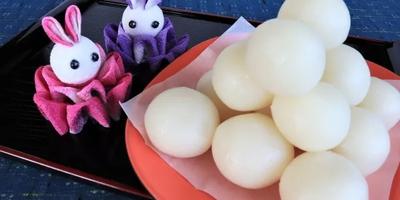
Through out Japanese culture there are several different references to rabbits in stories, and diffe...Japanese Universe
During 月見 (Tsukimi), people eat 餅 (mochi) — rice cakes — inspired by folklore that moon rabbits 月の兎 (tsuki no usagi) “make or pound rice into rice cakes.” According to legend, a Japanese folktale tells how a rabbit sacrificed itself by jumping into a fire to provide food for humans. To honor this sacrifice, a god placed the rabbit on the moon, where people can now see its image.
The main character of the Sailor Moon series, Selena Tsukino, plays on this folklore. Specifically, her name refers to 月の兎 (tsuki no usagi) — rabbits on the moon.
During this time, moon-themed dishes are popular. For example, Japanese 月見料理 (Tsukimi ryōri) — moon viewing cuisine — often uses egg yolks to represent the full moon. The 月見バーガー (Tsukimi bāgā) — moon viewing burger — is a popular seasonal menu item in autumn.
🏮 Paper Lantern (Chōchin): Illuminating Japanese Culture and Tradition
We come to the 提灯 (Chōchin) — paper lantern. The 🏮 Paper Lantern emoji represents more than just a light source. In Japanese culture, people use them for practical illumination and festive decoration.
Craftsmen design a 提灯 (Chōchin) primarily as a lighting tool to hold a candle. They build its unique structure by spirally winding thin bamboo strips (割竹 (higo)) to form a frame, then paste paper over it. They attach an upper “mouth ring” (口輪, kuchiwa) and a lower “bottom ring” (底輪, sokowa), enabling the lantern to fold and collapse.
Early forms called 挑灯 (chōtō) consisted of wooden frames or baskets covered in paper and hung like temple lanterns (釣灯籠, tsuridorō). Over time, people evolved these into portable “basket lanterns” (籠提灯, kago chōchin) with handles. Around the 天正 (Tenshō) and 文禄 (Bunroku) eras (1573–1596), artisans developed the folding lantern, starting with the “box lantern” (箱提灯, hako chōchin). During the Edo period, people popularized 提灯 (Chōchin) as portable lighting, replacing traditional 行灯 (andon) lanterns and inspiring many new types. Consequently, specialized artisans and shops emerged to make and repair 提灯 (Chōchin).
This Japanese lantern emoji ties closely to Japanese culture. For Example people use 提灯 (Chōchin) to illuminate night festivals (祭り, matsuri) and to create vibrant, traditional atmospheres.
🎊 Kusudama : Japanese Paper Craft for celebration
People know the 🎊 emoji as the くす玉 (kusudama) emoji. They use it frequently to represent joy and celebration at parties and events.
To understand the 🎊 emoji, and its connection in Japanese culture it helps to know what a physical くす玉 (kusudama) means and how it works. Originally, 薬玉 (kusudama) or 久寿玉 (kusudama) referred to a scent bag—a brocade pouch filled with medicinal herbs, aromatic plants, and spices. People decorated it with artificial flowers and five-colored threads to symbolize wishes for longevity and good health. Today, in Japan くす玉 (kusudama) usually takes the form of a spherical object hung from the ceiling by a string. When someone pulls a lower string, it releases a retaining rubber that makes the sphere burst open. As it opens, paper streamers unfurl and hang down, while balloons and confetti scatter and flutter. Sometimes, a congratulatory banner (e.g., 祝○○○○○ — celebration [message]) drops from the center. The 🎊 emoji visually captures this moment when the ball bursts open and releases its festive contents.
A similar emoji is the party popper emoji 🎉. This uses a pull string to ignite gunpowder, making a popping sound and celebrating special occasions.
👘 Yukata or Kimono (浴衣)
The 👘 emoji represents a 着物 (kimono), which is a traditional Japanese garment and also considered a national costume (民族服 – minzoku fuku). Or is it a 浴衣 (yukata)? The 浴衣 (yukata) is primarily a casual outing wear (お出かけ着 – odekakegi) designed to keep cool and is one of Japan’s summer traditions (夏の風物詩 – natsu no fūbutsushi). People wear these during summer festivals (夏祭り – natsu matsuri) and fireworks festivals (花火大会 – hanabi taikai). Many also wear 浴衣 (yukata) when staying at a 旅館 (ryokan) — a traditional Japanese inn. This emoji broadly refers to various types of traditional Japanese attire, and Japanese people often use it when discussing these festivals or related cultural contexts.
🎴 Hanafuda (花札)
The 🎴 Hanafuda (花札) emoji is a traditional Japanese playing card game.
Japanese card games trace their history back to the late 16th century (late Muromachi period), when Portuguese traders introduced かるた (karuta) — playing cards. Authorities banned gambling with karuta consistently throughout the Edo period. Still, players found a loophole in 花札 (hanafuda), which sometimes masqueraded as educational 歌留多 (uta-karuta) — poetry cards. Police authorities coined the term 花札 (hanafuda) during the Meiji era as a derogatory label tied to gambling.
花札 (Hanafuda) cards showcase unique seasonal imagery. A standard deck includes 48 cards, divided into 12 months, each represented by four cards featuring flowers or plants. Hence the name 花札 (hanafuda), meaning flower cards. These illustrations capture the poetic beauty of nature, expressed by the Japanese term 花鳥風月 (kachōfūgetsu) — flowers, birds, wind, moon. This is a four-character idiom celebrating natural beauty. For example, one card depicts 芒に月 (susuki ni tsuki) — pampas grass and a white full moon. Each design carries a point value.
Social media often links 花札 (hanafuda) to popular manga like Demon Slayer.
Nintendo stands as one of Japan’s biggest globally recognized companies that started as a 花札 (hanafuda) manufacturer. In 1960, 花札 sales accounted for 32% of Nintendo’s revenue. By 1979, that share dropped to 5%, but the historical connection endures. Today, Nintendo still sells 花札 (hanafuda) decks, some featuring Mario character designs.
Nintendo first created the “Mario Hanafuda” as a non-sale promotional item in 2003 and later commercialized it in 2015.
🌊 北斎の波 (The Great Wave off Kanagawa)
The 🌊 wave emoji generally signifies an ocean wave, but its design directly references Hokusai’s 神奈川沖浪裏 (Kanagawa-oki Nami Ura) — The Great Wave off Kanagawa. Katsushika Hokusai created this multi-color woodblock print (浮世絵, ukiyo-e) between 1830 and 1834. This masterpiece is among the most famous ukiyo-e prints and serves as a global icon of Japanese art. Outside Japan, it’s widely recognized simply as The Great Wave.
Hokusai’s artwork depicts a dramatic scene with violently high, swirling waves threatening three boats caught in the surf, with Mount Fuji in the background. The emoji distills this image, omitting the boats and Mount Fuji for simplicity.
People use the 🌊 emoji broadly to represent the sea, tides, or anything ocean-related. Often, it’s paired with other emojis to evoke summer activities like surfing and beach outings.
Resources
Categories
Related Articles
絵文字 – The Japanese Meaning Behind Your Emoji’s Facial Expressions

The History of Emoji: Japan Gave the World a New Language
ブイズ – All Eevee Evo or Eeveelutions in Japanese