絵文字 – The Japanese Meaning Behind Your Emoji’s Facial Expressions
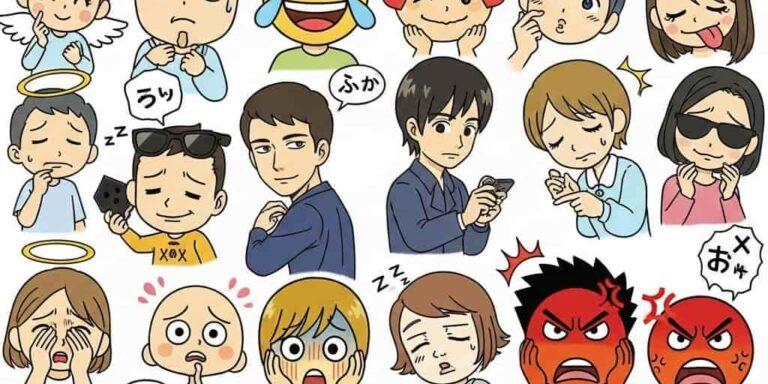
The global emojis may seem universal, but their true origines and deepest meanings often lie hidden within Japanese cultural expressions, and from popular media like Manga and Anime. You might think you know emojis, but in Japan, these tiny icons carry a universe of cultural meaning that goes far beyond a simple happy or sad face. Born from a need to restore non-verbal cues in digital communication, and just for a fun way to allow Japanese people to make their texts more unique. Get ready to uncover the fascinating origins and the rich, often surprising, nuances behind the emoji faces you use every day – because in Japan, a simple smile can mean so much more.
Table of Contents
The Original Smiley Face
The smiley face boasts a complex history. Multiple claims surround its origin. Initially, Harvey Ross Ball created the iconic design. In 1963, he designed it for State Mutual Life Assurance. The design features a yellow background. It includes distinctive eyes and a mouth. However, Ball never trademarked it. Interestingly, a smiling face predates his work. A 3,700-year-old Hittite jug shows a smiley face. Unearthed at Karkemish, it held sherbet. Consequently, it’s the oldest known smile. The site will become an archaeological park. Over time, smiley face depictions multiplied. Meanwhile, the Smiley Company connects to modern emojis. Since Ball didn’t trademark his design, Franklin Loufrani acted. In 1972, he founded the Smiley Company. He used the smiley in France Soir. Additionally, he trademarked the Smiley globally. In 1996, the company licensed a pictogram to Alcatel. This appeared on cell phone screens. It predated NTT Docomo’s emoji efforts. By 1999, Nicolas Loufrani created 256 icons. These included 42 emotions. He claims Apple’s 2008 emojis drew inspiration. Moreover, their yellow smileys symbolize unity. Yet, Ball’s design was already yellow. Today, the smiley face has countless variations. It appears on numerous products. Its meaning shifted from optimism. Now, it’s a commercial logo. Also, it represents rave culture. Furthermore, it conveys emotions in texts.
The Emoji Genesis
Early Unicode added Western expressions. For example, the sunglasses emoji 😎 and halo emoji 😇 emerged. But, prior to this Emoji which originated in Japan had a life of their own.
Emoji, born from 絵 (e, picture) and 文字 (moji, character), convey emotions in digital communication. Originating in Japan’s high-context culture, they restore non-verbal cues lost in text. Initially, kaomoji like (^_^) for happiness or (T_T) for sadness used ASCII characters. Subsequently, Japan’s 1990s mobile culture fostered emoji creation. Shigetaka Kurita’s 1999 NTT Docomo set standardized pictograms. Later, Unicode’s 2010 adoption globalized them. Meanwhile, Japanese emoji faces reflect subtle emotions, rooted in manga and kuuki o yomu (reading the air). Thus, they clarify intent, soften messages, and express nuanced feelings.
In Japan, emoji faces from NTT Docomo’s 1999 set convey nuanced emotions. Rooted in manga and high-context culture, they express subtle feelings. For instance, 😊 (にこにこ, niko niko, warm smile) shows calm joy. Meanwhile, 😅 (冷や汗, hiyase, cold sweat) reflects nervous relief. Additionally, 😜 (あっかんべー, akkanbē, tongue out) captures playful teasing. These emojis, inspired by kaomoji, clarify tone in text. Thus, they bridge emotional gaps in digital communication. Below I introduce what these can mean. Though many can have various individual interpretations, this should give you a good idea when reading Japanese texts, or trying to pick the right Emoji for your communication.
Joy, Laughter, and Grins 😃😄😁😊😆😂
😃😄 わーい (wāi, Yay!)
The happy out loud emoji is for joy. It expresses excitement over positive events. For example, someone uses it for great news.
😁 にやにや (niya niya, Grinning mischievously)
This emoji shows a grinning quietly expression. It hints at smugness or mischief. Often, it conveys knowing humor without loud laughter.
😊 にこにこ (niko niko, Warm smile)
Warm smiling face. This emoji is the closest to the original idea of the Smiley. It is a soft, modest smile which indicates kindness, satisfaction, calm joy. In Japanese that is represented by にこにこ (niko niko). Note the difference as mentioned above for にやにや(niya niya), which is more mischievous, or may have some sort of inside joke someone is grinning about.
😆 きゃー (kyā, Scream of joy), あはは (ahaha, Laughter), うけるね (ukeru ne, That’s funny!)
Bursting into laughter or joy. Used when something is super funny or delightful. The word, きゃー(kyaa) is an interjection for screaming. It is use for surprise for something, or being scared by something. But here it is used in a happy sense. Or the Emoji can mean that someone was amused and is bursting out in laughter because of a joke or something else.
😂 嬉し泣き (ureshi naki, Crying with joy), 爆笑 (bakushō, Bursting laughter), 泣き笑い (naki warai, Laughing while crying)
Tears of joy. There is not too much difference here from how anyone else would use the Emoji outside of Japan. This is crying from laughing too hard, or being so emotionally moved you laugh through tears or cry for joy.
Awkwardness and Sweat 😅😓
😅 とほほ (tohoho, Alas), 冷や汗笑い (hiyase warai, Nervous laugh)
Awkward smile with sweat. Common in situations where you’re embarrassed, caught off guard, or trying to downplay a mistake. This is a very commonly seen expression in Japanese Anime and Manga. It is called 苦笑い (niga-warai), or a bitter laugh.
😓 Disappointed but Relieved Face 冷や汗 (hiyase, Cold sweat), 安堵 (ando, Relief)
This emoji displays a downcast face. It features a sweat drop on the forehead. Consequently, it conveys relieved anxiety. For example, it suits narrowly escaping trouble. Additionally, it expresses embarrassment or lingering stress. In Japan, 冷や汗 (hiyase) captures nervous sweating. Similarly, 安堵 (ando) reflects a “Phew, that was close!” feeling. It blends sadness with relief. Also, it retains a sense of unease. Other emoji (💦💧) like sweet and water drops alone can be used to express the same sort of emotions.
Innocence, and Love 😇😍😘😚
😇 天使 (tenshi, Angel), 穏やか (odayaka, Calm), 終わった (owatta, It’s over)
Innocent smile with halo. This has the same nuance as overseas. In fact this is an expression originating from American, or Western cartoons. It was not originally in the NTT Docomo set of Emoji either, and appears to have been added when Emoji become unicode. You see it though when someone is playing innocent, feels blessed, or is jokingly saying “I’m pure now.” Sometimes ironically used after doing something sneaky.
😍 目がハート (me ga hāto, Heart eyes), 恋 (koi, Love), かわいい (kawaii, Cute)
Love-struck. More than showing someone they are in love with someone else, it is more of a way to express infatuation or intense affection. So, showing infatuation for an idol, a super cute cat.
😘😚 ちゅっ (chu, Kiss), 投げキッス (nage kissu, Blowing a kiss)
This emoji sends air kisses. It blends affection with playfulness. Often, it carries a flirtatious tone.
Flirtation, Playfulness & Teasing 😉😋😜😝👻
😉 ウィンク (uinku, Wink)
Flirty or playful wink. Winking here for the most part has the same nuance in Japan and outside of Japan. Often used jokingly, or to add a cheeky nuance, or to be flirty, just playful, or a bit teasing.
😋 ぺろり (perori, Licking), うまっ (umā, Yummy), おいしそう (oishisō, Looks delicious)
Happy face licking lips. Expresses hunger, satisfaction after a meal, or delicious-looking food.
Japanese. I can also have a nuance to show charm to those around you when you make an inadvertent mistake or failure. Which is knows as the てへぺろ (tehepero). You have probably seen this one in Anime also, where someone has an eye closed and their hand behind their head.
- ぺろり(perori) :(licking onomatopoea)
- 美味しそう(oishisou):That looks delicious
- てへぺろ(tehepero): (tehehe)+(pero) combine an oopsies laugh, with sticking your tough out.
😜😝👻👅 あっかんべー (akkanbē, Tongue out), べー (bē, Bleh), ふざけ (fuzake, Joking)
Playful face sticking out tongue. All express teasing, joking around, or being goofy.
Japanese nuance: Funny tone, childish, teasing, flirtatious
The emojis 😜, 😝, and 👻 are directly connected to the concept of あっかんべえ(Akkanbe). This is where someone, especially a child, or someone trying to act teasingly childish sticks out their tough, closes an eye and pulls down an eyelid. This is also another Manga trope you have likely seen. This has a longer history though and ghosts, or specifically お化け(obake) are shown making this face often in Japan. It is important to note that there are several different types of ghosts, or spirits in Japan. If you talk about spirits you could be talking about anything from a deceased person’s spirit, a nature spirit or fairy-like creature, a currently living person’s spirit, all the way up to a God. But, in the case of this emoji, 👻 this obake specifically refers to the same sort of ghost you would see on Halloween outside of Japan.
But, the difference in Japan is this ghost is conflated with two different Japanese Yōkai. First the 提灯お化け (chōchin obake: lantern ghost) which is depicted as a flying lantern paper lantern 🏮, one eye and sticking out its tough. Next, the 一つ目小僧 (hitotsume kozō: one-eyed child) sticks out his tough and well, has one eye.
Unimpressed 😐😶😏😒
😐😶 ポーカーフェイス (pōkāfeisu, Poker face), 無言 (mugon, Silence), だんまり (danmari, Mute)
Blank or neutral face. These two are similar so I included them together, but are not exactly the same. They can indicates someone is expressionless, speechless, or has shut down emotionally.
😐 The poker face emoji, can conveying a cold or dismissive attitude. You can also use 😐 to express a feeling of not caring.
😶 The mouthless emoji, can be used in a way to not want to talk about something. Or it could be used as a negative meaning like disappointment. You have likely also seen in Anime or Manga, characters in the background drawn with this face. 沈黙 (chinmoku: silence) means silence and represents this emoji the best. It can mean a lot of things, like anxiety, awkwardness, disapproval, or simply I’m not getting involved with this.
😏 にやり (niyari, Smirk), ふっ (fu, Heh)
Smirking or smug face. Suggests smugness, confidence, or sly humor. Often used flirtatiously or sarcastically. This comes from the ドヤ顔 (doya gao) or smug face. This is used to show boastfulness, or self-confidence.
😒 しらけ (shirake, Unimpressed), ジト目 (jito me, Sidelong glance)
Unamused. This face expresses that someone is not amused by something or do not approve of it. Sometimes with a sense of irritation or sense of unfairness. Sort of like saying, Are you joking?
😌 ほっ (ho, Phew), 安心 (anshin, Relief)
The relieved or content emoji shows relaxation. It also suggests sleepiness. Users feel at peace with it.
Disappointment 😔😞
😔😞 しょぼーん (shobōn, Downcast), がっかり (gakkari, Disappointed)
Downcast or disappointed. Expresses a mix of sadness, regret, and dejection. It could be a light dejected feeling like 😔 しょぼーん, or more of a hopeless feeling like 😞.
😥 Disappointed/Worried Face
This emoji features a single sweat drop. Its down-turned mouth and furrowed eyebrows show stress. It conveys worry or regret. For example, it suits financial struggles or aging concerns.
😪😴 眠い (nemui, Sleepy), ぐー (gū, Snooze), 疲れた (tsukareta, Tired)
Sleepy faces. Straightforwardly These emoji are sleeping. It can mean sleeping or indicate fatigue, drowsiness, or being out of energy. The 😪 shows another Anime or Manga trope where a bubble is coming out of the nose while sleeping. But, the second one, 😴, with the zzzz is also common in Japan.
😷 マスク (masuku, Mask), 体調不良 (taichō furyō, Illness)
Face with mask. Often used literally (for illness, hay fever) or to imply “I don’t want to talk.” This one became famous around the world with Covid-19. But it has existed in Japan from the Docomo days. In Japan wearing masks during colds or illness has been around for a long time and before it was a thing around the world, Japan was already doing it.
😵 「ぐるぐる」「ふらふら」Dazed or Flushed
The 😵 emoji is a visual representation that is deeply rooted in Japanese visual language, particularly manga and anime, where “Batsu-me” (バツ目), or “X-eyes,” is a common symbol.
The 😵 emoji is used to convey a wide range of meanings, primarily focusing on negative physical or mental states like fatigue, exhaustion, illness, intoxication, loss of consciousness, strong physical reaction like pain, blurry vision and so on. But to simplify it most of the time it means dizzy. In Japanese there are a few onomatopoeia words that are used to explain this.
- ふらふら (fura-fura) – unsteady or wobbly
- ぐるぐる (guru-guru) – spinning
Psychologically, this can mean feelings of incomprehension, panic, dismal, shock, or just that you have had enough in general. 😵💫 is a related emoji that was introduced in 2021. This was after the globalization of Emoji so it is not directly related to the original Japanese emoji, but is clearly based on the same sort of Japanese Anime iconography you see all over Manga.
Also, we have not talked about these yet, but 😨 and 😰 can suggest coldness or physical discomfort due to fear/tension (e.g., cold sweat), and can overlap with 😵.
😖😣😩😫 Pain, fatigue, frustration
😖 困惑 (konwaku, Confusion), 頭が痛い (atama ga itai, Headache from confusion)
This emoji displays a pained expression. It conveys confusion or frustration. For instance, it suits moments of mental overload. Additionally, it reflects a headache from complex situations. In Japanese, 困惑 (konwaku) captures puzzled distress. Similarly, 頭が痛い (atama ga itai) emphasizes mental strain.
😣 我慢 (gaman, Endurance), 苦しい (kurushii, Painful)
The pained face emoji shows clenched eyes. It expresses endurance under stress. For example, it fits tough emotional moments. Moreover, it conveys painful struggle. In Japan, 我慢 (gaman) highlights perseverance. Likewise, 苦しい (kurushii) underscores intense discomfort.
😩 あきらめ (akirame, Giving up), へとへと (hetoheto, Exhausted)
This emoji portrays a weary expression. It signals giving up from fatigue. For instance, it suits overwhelming workdays. Furthermore, it reflects exhaustion. In Japanese, あきらめ (akirame) denotes resignation. Also, へとへと (hetoheto) captures being completely drained.
😫 限界 (genkai, Limit), 崩壊寸前 (hōkai sunzen, On the verge of collapse)
The distressed face emoji shows open-mouthed anguish. It conveys reaching a limit. For example, it fits extreme stress moments. Additionally, it suggests collapse is near. In Japan, 限界 (genkai) indicates a breaking point. Similarly, 崩壊寸前 (hōkai sunzen) emphasizes imminent breakdown.
😎 「クール」「イケてる」Coolness
Sunglasses = Cool. This was not one of the original Docomo or SoftBank emoji, but was introduced later in Unicode 6.0 when Emoji became global. Outside and inside of Japan it has a sense of being cool. It shows confidence or sarcasm depending on context. Or it can just mean going on vacation somewhere with the sun
😳 Dazed or Flushed 赤面 (sekimen, Blushing), とまどい(tomadoi, Bewilderment)
This emoji shows a flushed face. It features wide-open eyes and reddened cheeks. Additionally, it conveys shyness or embarrassment. For example, it suits awkward group date moments. Moreover, it expresses bewilderment or surprise. In Japan, 赤面 (sekimen) highlights blushing from unease. Similarly, とまどい (tomadoi) captures confusion or awkwardness. The expression mirrors ( ゜Д゜)ポカーン (pokān, stunned daze). It also fits awe at large events. Note that the mouth shape varies by platform.
😲 Astonished Face びっくり (bikkuri, Shock), 驚き (odoroki, Surprise)
This emoji displays wide-open eyes. It features a large O-shaped mouth revealing teeth. Consequently, it conveys strong astonishment. For example, it suits pulling rare game items. Additionally, it expresses admiration at Fushimi Inari’s torii gates. In Japan, びっくり (bikkuri) captures sudden shock. Similarly, 驚き (odoroki) reflects positive surprise. It resembles 😯 but shows greater intensity. Also, it conveys excitement or interest.
😨😰😱 Fear, Shock, and Panic 絶叫 (zekkyō, Screaming), 衝撃 (shōgeki, Shock), 叫び (sakebi, Cry)
😨 Scared Face 青ざめ (aozame, Paleness), ドン引き (donbiki, Shock or disgust)
This emoji shows a blue upper face. It features round eyes expressing fear. Additionally, it conveys a chilling dread. For example, it suits failing grades or hangovers. Moreover, it reflects disgust at words. In Japan, 青ざめ (aozame) captures paleness from fear. Similarly, ドン引き (donbiki) expresses shock or repulsion. The mouth shape varies by platform. Also, it resembles 😱 and 😰 (“Face with open mouth and cold sweat”) emojis.
😰 Anxious Face 冷や汗 (hiyase, Cold sweat), 緊張 (kinchō, Tension)
This emoji displays an entirely blue upper half. It features furrowed eyebrows and a down-turned mouth. Consequently, it conveys tension and anxiety. For instance, it suits declining a salesperson politely. Additionally, it expresses worry over unprepared presentations. In Japan, 冷や汗 (hiyase) highlights nervous sweating. Similarly, 緊張 (kinchō) captures intense unease. It resembles 😥 and 😓 emojis which also reflects sadness or awkwardness.
😱 Screaming Face 絶叫 (zekkyō, Screaming), 衝撃 (shōgeki, Shock)
This emoji features hands on cheeks. It shows a wide-open mouth and a blue upper head. Consequently, it conveys immense surprise. For example, it suits scary movie reactions. Additionally, it expresses shock over sold-out coffee jelly. In Japan, 絶叫 (zekkyō) captures intense screaming. Similarly, 衝撃 (shōgeki) reflects sudden astonishment. It draws inspiration from The Scream. Also, it resembles 🙀 and 😨 emojis.
Sadness 😢😭
😢 and 😭 are directly about crying and sadness, but 😭 generally expresses stronger sadness and uncontrollable crying. However at the same time this emoji also can be from extreme relief about overcoming something, or being deeply moved about it. It also is more likely to be used in a joking or not too serious situation. 😢 on the other hand is more mellow, but is more likely to represent true sadness over something.
😢 Crying Face 泣き顔 (nakigao, Crying face), 悲しい (kanashii, Sad)
This emoji shows down-turned eyebrows. It features a single tear from the right eye. Consequently, it conveys sadness. For example, it suits mourning a public figure’s passing. Additionally, it expresses frustration over a frozen computer. In Japan, 泣き顔 (nakigao) captures a tearful expression. Similarly, 悲しい (kanashii) reflects deep heartache. It also signifies crying from emotional pain.
😭 Loudly Crying Face 大泣き (ōnaki, Loud crying), 感動 (kandō, Deep emotion)
This emoji shows streaming tears. It features closed eyes and an open mouth. Consequently, it conveys extreme sadness. For example, it suits losing a wallet. Additionally, it expresses overwhelming joy from sibling love. In Japan, 大泣き (ōnaki) captures intense wailing. Similarly, 感動 (kandō) reflects deep emotional impact. The tear state varies by platform. Also, it signifies heartache or strong feelings.
Upset and Angry 😤😡
😤 ふんっ (fun, Hmph), 鼻息荒い (hanaiki arai, Rough breathing)
The puffed face shows pride or frustration. It conveys effort or defiance, like 頑張る! (ganbaru, Keep going!).
😡💢 ぷんぷん (punpun, Fuming), かんかん (kankan, Furious)
Angry face. The angry face shows rage. Along with that 💢 directly represents the manga-style anger vein (青筋, seisuji, blue vein).
I hope this deep dive has opened your eyes to the fascinating world of Japanese emoji meanings, revealing the rich culture, subtle emotions, and everyday nuances hidden right in your keyboard. From understanding a nervous sweat to recognizing a proud smirk, these little icons offer a powerful way to connect with Japanese communication. Ready to explore even more of Japan’s digital language? Discover the specific cultural symbols and traditions embedded in uniquely Japanese emojis like the Oni, Tengu, Hanafuda, and Great Wave in our next article:
Resources
Categories
Related Articles
Japanese Emoji (絵文字)👺 – The Hidden Culture in your Keyboard
The History of Emoji: Japan Gave the World a New Language

改善 – Kaizen in Japanese: Defining the Japanese Concepts behind the Method