午年 - 2026: The Year of the Horse and this year is the special one
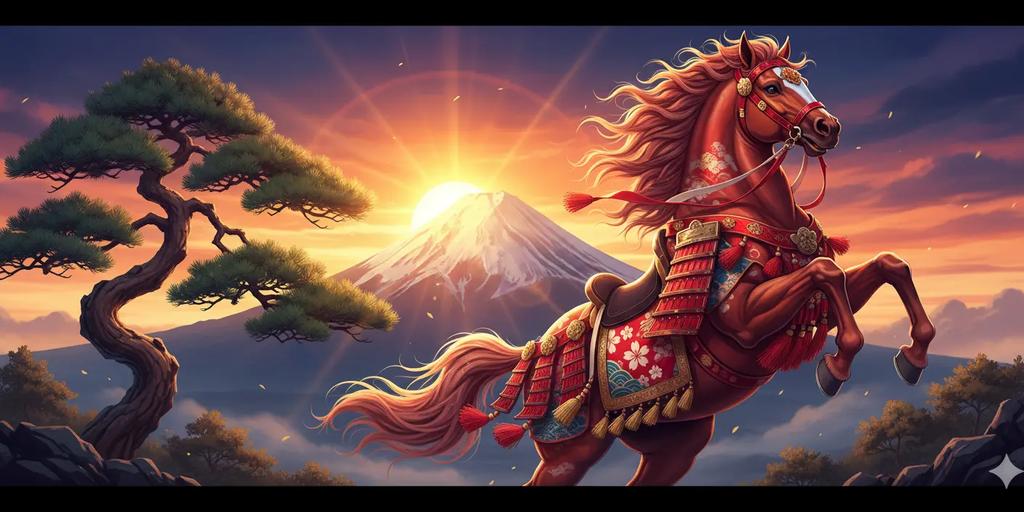
If you are learning Japanese or are interested in Japanese culture, you may have heard the term Eto (干支). This is the Japanese word for the Chinese Zodiac which features 12 animals. But this is more than just a cycle of animals or fortune-telling. It is, in fact, a key to everything from the formation of words, to people's perceptions of personality, and even historical superstitions.
Year of 2026 is the Year of the Horse (Uma-doshi), one of the most active and energetic animals in the Japanese Zodiac (Jūnishi). In this article, we will explore the significance of the Year of the Horse, its connection to the Japanese language, and its controversial history. Here we are going to learn about the horse and about how it fits into the Japanese concept of time!
Table of Contents
The Year of the Horse: The Basics of Eto and the Special Cycle
First we need to review the basics of Eto. The term Eto refers to the calendar system, originally introduced from China, which combines the Twelve Zodiac Animals (Jūnishi—Mouse, Ox, Tiger, etc.) with the Ten Celestial Stems (Jikkan - 十干), which represent elements of the natural world.
While the Twelve Zodiac Animals cycle every 12 years, the full Eto, which combines the Animals and the Stems, completes a cycle every 60 years. Celebrating this 60-year full cycle and returning to the Eto of one's birth is what is known as Kanreki (還暦), or the 60th birthday celebration.
Therefore, the upcoming Year of the Horse is not just the year of the horse. In the complete Eto framework, it is a special combination that only occurs once every 60 years. Understanding this special cycle helps us appreciate the depth of the Eto culture.
The Horse and Uma-doshi: The Sacred Image in Japanese Culture
To discuss the Year of the Horse, we must first look at the image of the horse itself. What comes to mind when you think of a horse?
Its powerful sprinting form, its role in supporting human life and warfare throughout history maybe? The horse has long been considered a sacred animal in Japan. For instance, the small wooden plaques known as Ema (絵馬) that people dedicate at Shinto shrines are remnants of a past practice where actual living horses were offered to the deities. In this way, the horse was seen as a vital intermediary between the gods and people.
This positive image of representing vitality, action, and social congeniality is deeply connected to the personality traits attributed to those born in the Year of the Horse, as we will explore in the next section.
Personalities of Uma-doshi People: Positive and Sociable?
The Eto system has also influenced how people perceive personality. Given that the hour of the Horse (Uma no Koku) was considered the time when the sun was highest in the sky, people born in the Year of the Horse are thought to embody the horse's nature. Which is bright, open, and sociable.
People born in the Year of the Horse are generally characterized by quick action and energy. In other words, they are the type to act first and think later. They are energetic and always ready to take on new challenges. Furthermore, they possess an exuberant charisma that attracts others. Along with their strong communication skills, this also makes them the life of the party or the center of any discussion.
However, just as a horse can run wild, their passion can sometimes get the best of them, and they may be prone to starting things enthusiastically only to lose interest quickly. While their passion is admirable, they may need to make an effort to maintain focus on a single task.
The Kanji for Uma-doshi: The Linguistic Roots of Time
The concept of the energetic and influential Horse year is also connected with the Japanese way of expressing time.
For those who have studied some Japanese, doesn't the Kanji for Uma (午) in Uma-doshi look familiar? Perhaps you have seen it in words that denotes time, such as the middle of the day, Shōgo (正午), or noon?
In fact, the Twelve Zodiac Animals were used to denote not only years but also the hours of the day. In ancient times, the two hours between 11 AM and 1 PM (current midday hours) were designated as Uma no Koku (午の刻), or "The Hour of the Horse."
Consequently, the very middle of Uma no Koku, or 12:00 PM, came to be called Shōgo (正午). Hours before Uma no Koku are Gozen (午前, AM), and hours after are Gogo (午後, PM).
Isn't it fascinating to realize that the words Gozen and Gogo, which we use every day, actually originate from the ancient Eto system of telling time?
Moreover, the character Uma (午) also represented the direction of South. In ancient Japan, the Twelve Zodiac Animals served as a compass, designating not only the time of day but also the primary cardinal directions. Since Uma no Koku was the time when the sun reached its highest point, the Uma direction was associated with true South.
The Controversial Hinoe Uma Superstition: A Past That Moved Society
Finally, as we discuss the active Year of the Horse, we must touch upon a controversial topic that significantly impacted Japanese society: the superstition of Hinoe Uma (丙午).
Hinoe Uma refers to a specific combination within the 60-year Eto cycle, where the Celestial Stem Hinoe (丙) and the Zodiac Animal Uma (午) align, occurring approximately once every six decades.
Why Did Hinoe Uma Move Society?
From the early Edo period, a groundless superstition began to spread. Though rooted in complex interpretations of the Eto's "fire" element (reflecting the strong energy of Hinoe and Uma), this belief claimed that women born in the Hinoe Uma year were too strong-willed and would "shorten their husband's life." This superstition had its most profound impact on Japanese society during the 1966 Hinoe Uma year.
If we look at the birth rates in Japan during that time, we can observe that the number of births in 1966 saw a dramatic decrease compared to the years immediately preceding and following it. . This decrease is largely attributed to this superstition around Hinoe Uma and choosing to delay births or opt for termination.
The Hinoe Uma phenomenon is now mostly discussed as a "past social event," serving as a powerful, cautionary example of how deeply culture and folklore can influence human behavior and society as a whole.
Conclusion: Harness the Energy of the Year of the Horse!
The Year of the Horse is filled with energy, cheerfulness, and motivation.
We hope that through this article, you have come to appreciate that the Eto is not just a cycle of animals, but a profound cultural system that has shaped the Japanese language, concepts of time, history, and social phenomena.
We wish you all the best! May the spirited energy of the upcoming Year of the Horse propel your Japanese studies and your exploration of Japanese culture forward with even greater vigor!